
The Weight That Walked: Athens After Tempi
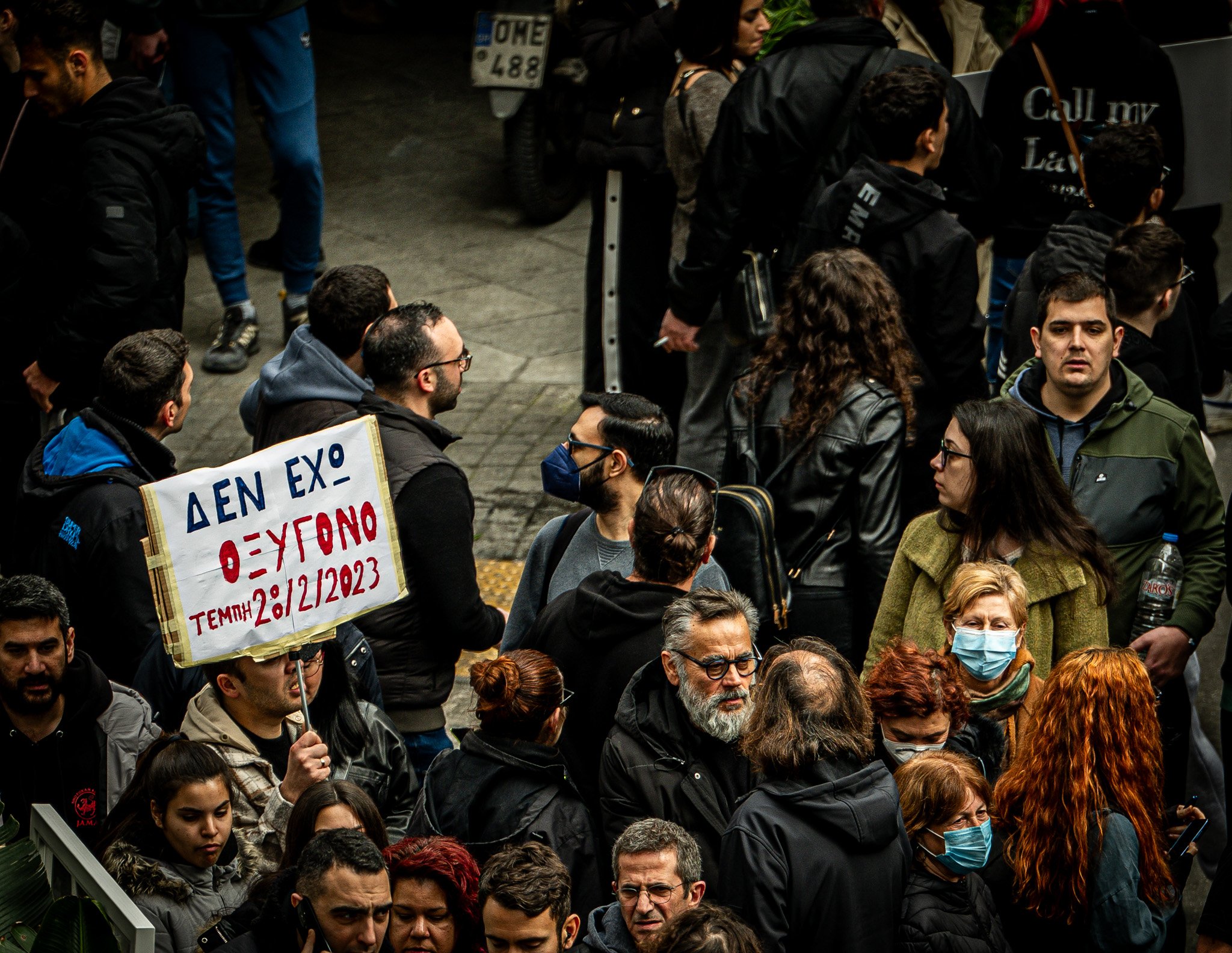
There was a collision between two trains on February 28, 2023. The accident happened near a place referred to as Tempi, a village 30km away from Larissa, Greece. Fifty-seven people died as a result of the accident. The people who died included many young students who were returning from university. It was one of the worst train crashes Greece had ever witnessed.
The first reaction was shock for the people of Greece as everyone was waiting to hear from their loved ones. People were called by name to determine who had died. Photographs of mangled metal and burnt train carriages filled the screens of televisions in Greece. However, behind all this was another emotion.
They said that the reasons for this tragedy were old problems, including outdated infrastructure, lack of warnings, understaffed, delays in implementing safety, and negligence. The tragedy for the Greeks was not a tragedy, but a problem that could have been prevented.
Everything had changed. Tempi had changed from being a tragedy about a train to being a tragedy about the Greeks' frustration about the inefficiencies and corruption of their government. This had been around for years, but not like this. The talk had been around for years, but not like this. The trust had been around for years, but not like this.
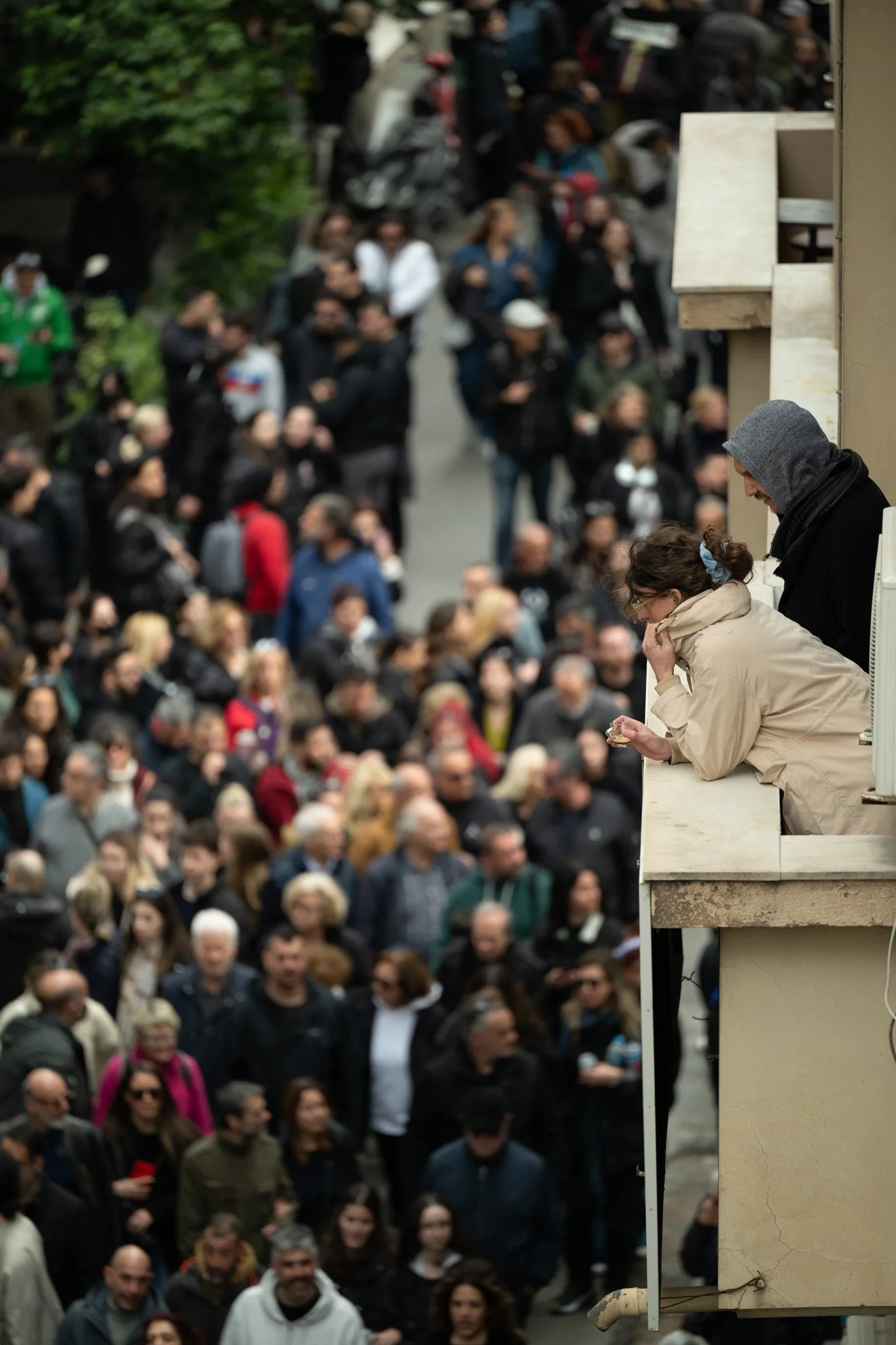
Thousands protested. In Athens. Not once, but many times. In the squares, on the streets, with photos of the dead, with signs asking for answers, with the conviction that it meant something, that it meant something beyond that one night.
It was a protest from the outside. It was a protest from the outside because it was disorganized. Thousands of people surged forward. Determination, resolve, set faces. Anger, sadness, sometimes a mix of both, were there too. This was not a protest. This was a kind of acknowledgment.
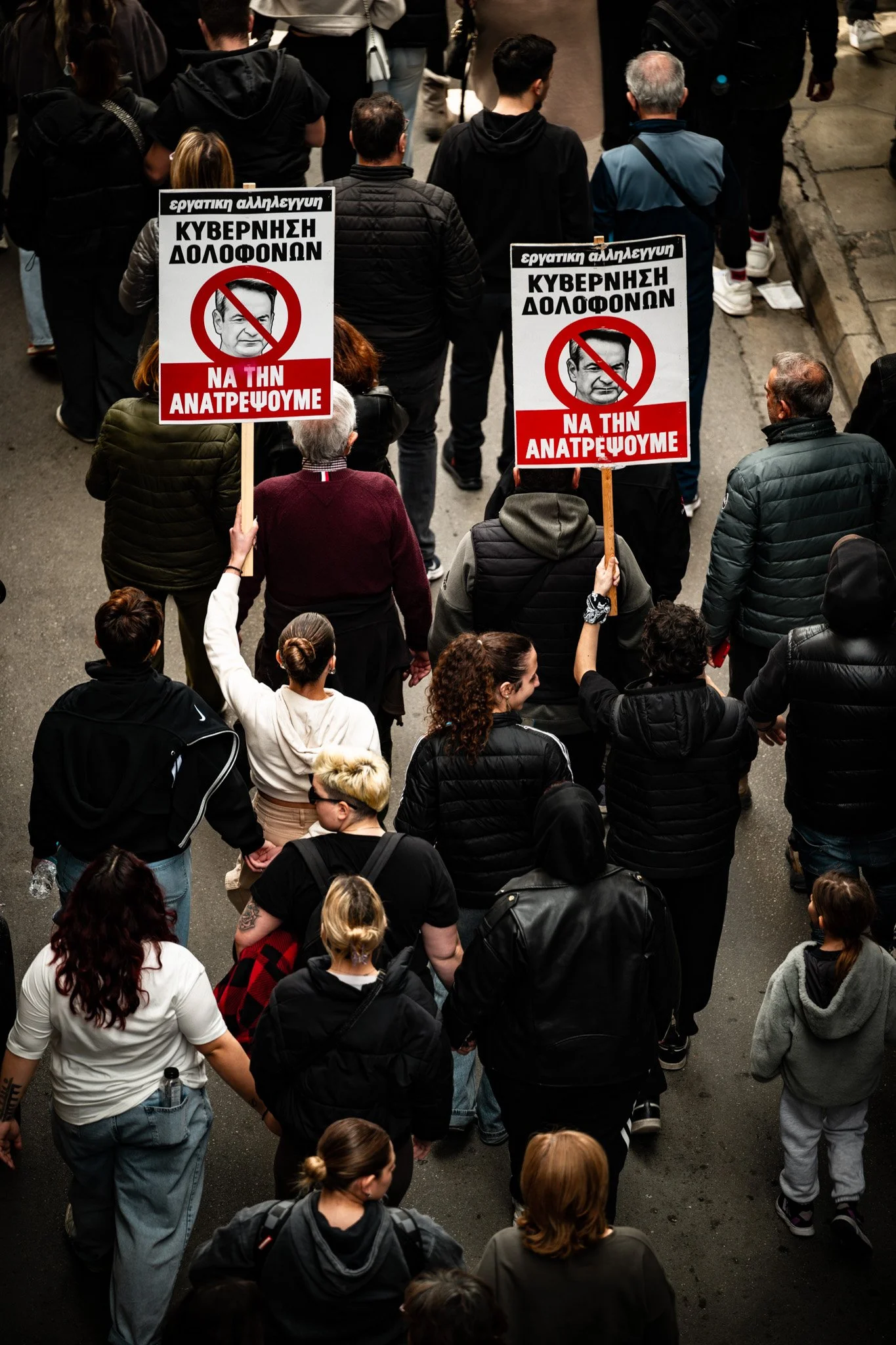
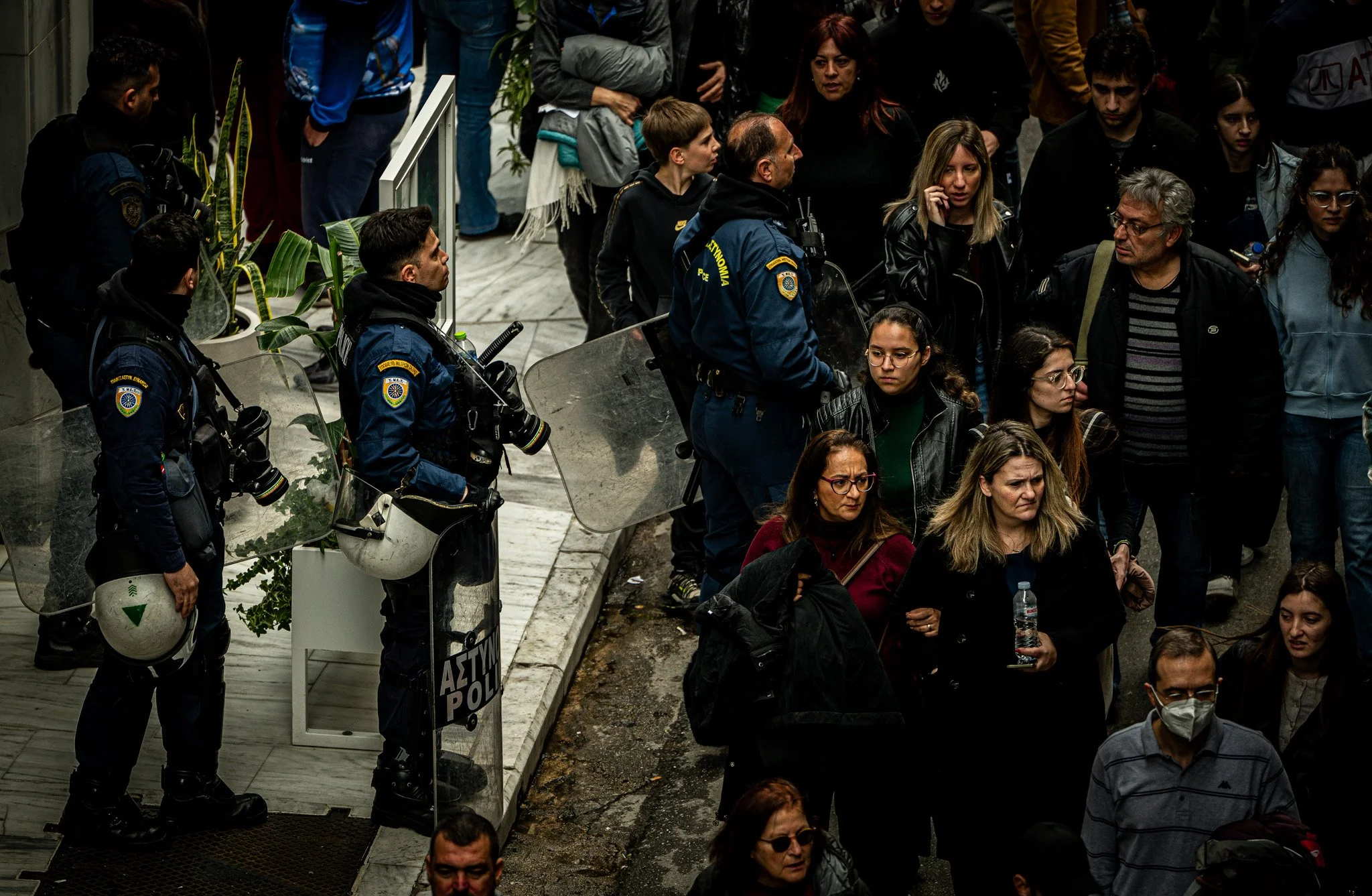
Last year, I had the opportunity to observe these protests and see the people rise up to combat the issues of corruption and change. When I walked outside and turned the corner into Syntagma Square, I was met with thousands of people pouring from every street corner. Before bringing my camera out, I wanted to get a feel of the space and the intensity. I remember seeing a police officer and I approached him asking the security levels of bringing my camera out. He said and I quote: “I cannot save you or your camera from people or other police officials, so it’s best not to bring it and to stay home.” I was taken aback by it, but realized later in the day as I observed the protests from Syntagma to Panepistimio, that it wasn’t the people, but the police that would take more action with the fact I would have a camera documenting this.
Three years later, Tempi is not forgotten. It is remembered in the conversation about infrastructure, safety, and politics. It is not that conversation for the families of the dead. It is not that conversation because it is a reality that is defined by absence. It is not that conversation because it is a reality that is defined by law, politics, ethics, a sense of unfinished business. It is a reality that is defined by absence, law, politics, ethics, a sense of unfinished business.
That is why moments like this refuse to fade.
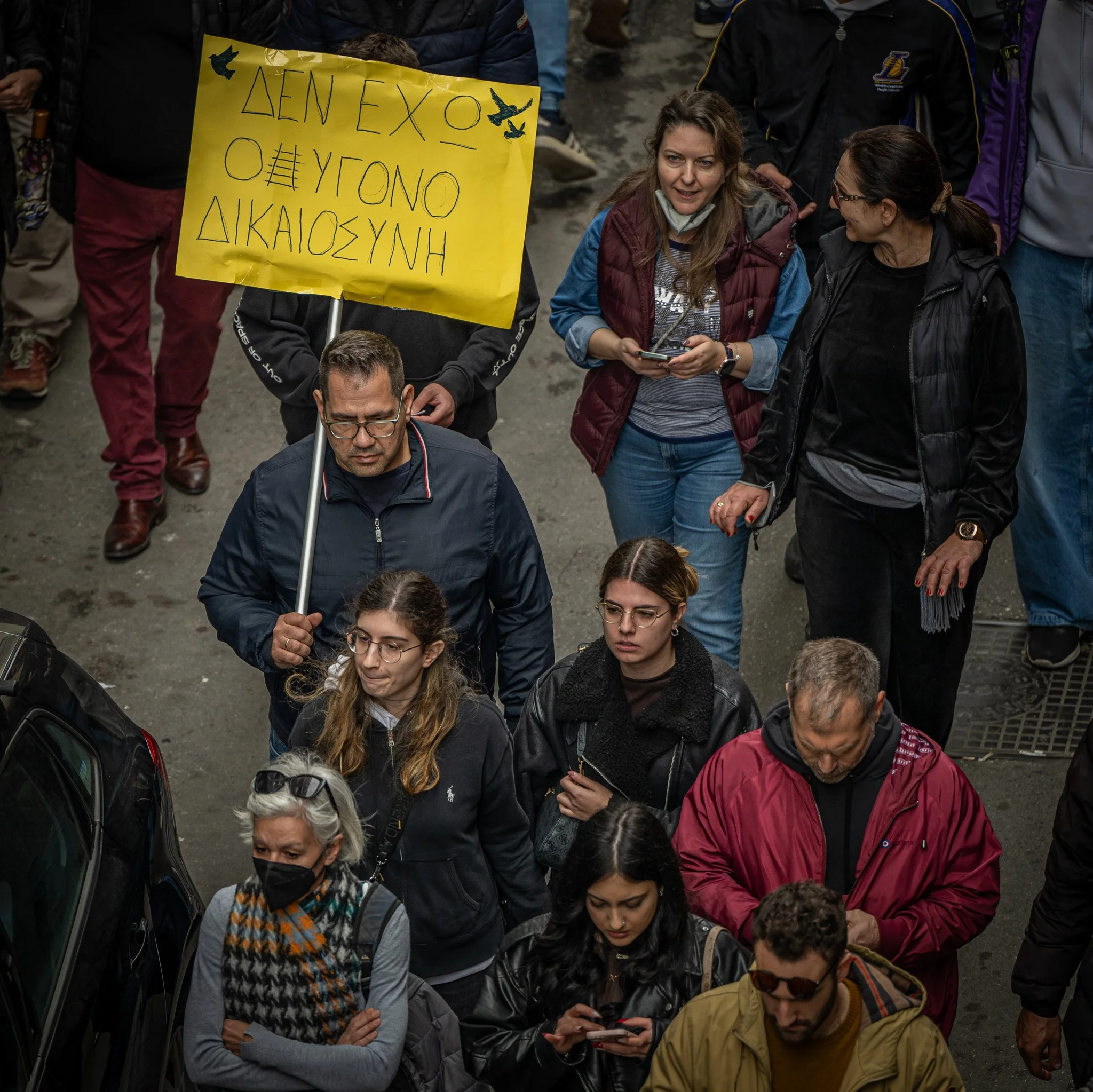
Tempi is a story that is specific to Greece. It is a story that revolves around fifty-seven people. It is a story that revolves around a nation that is trying to come to terms with the effects of a system that has failed. It is a story that revolves around a nation of people who want to make their state accountable for its role as their representative.
It is a story that many people can relate to beyond Greece. It is a story that revolves around the accumulation of frustration that finally results in a tragedy that makes one face a situation that was ignored for so long. It is a story that revolves around how people can continue living in a system that they do not fully believe in.
Most days, those frustrations remain private. Life continues. Work, school, family, routine.
Then something happens that makes the private visible.
Tempi became that moment.
And yet, the people walking through the streets of Athens were not just reminiscing about their dear departed; they were making a statement about how some failures were not allowed to become commonplace. About how some failures needed to be made accountable for. About how some failures and tragedies were not allowed to become relegated to history.
And yet, three years on, the movement of these people is significant.
For when trust is breached, memory is all that is left behind.