
The Hands of Nine Lives: The Role of Volunteers in Athens' Strays Survival
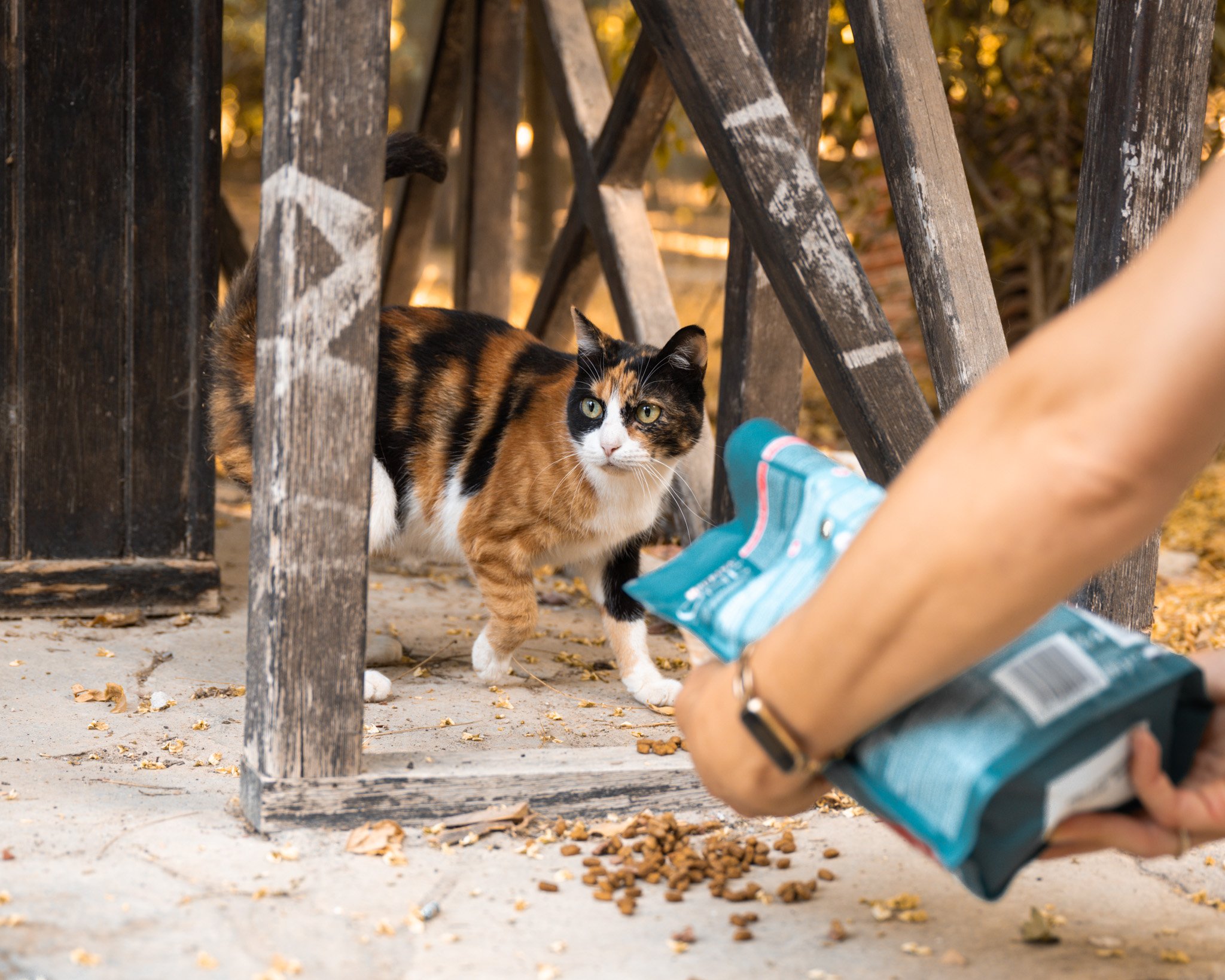
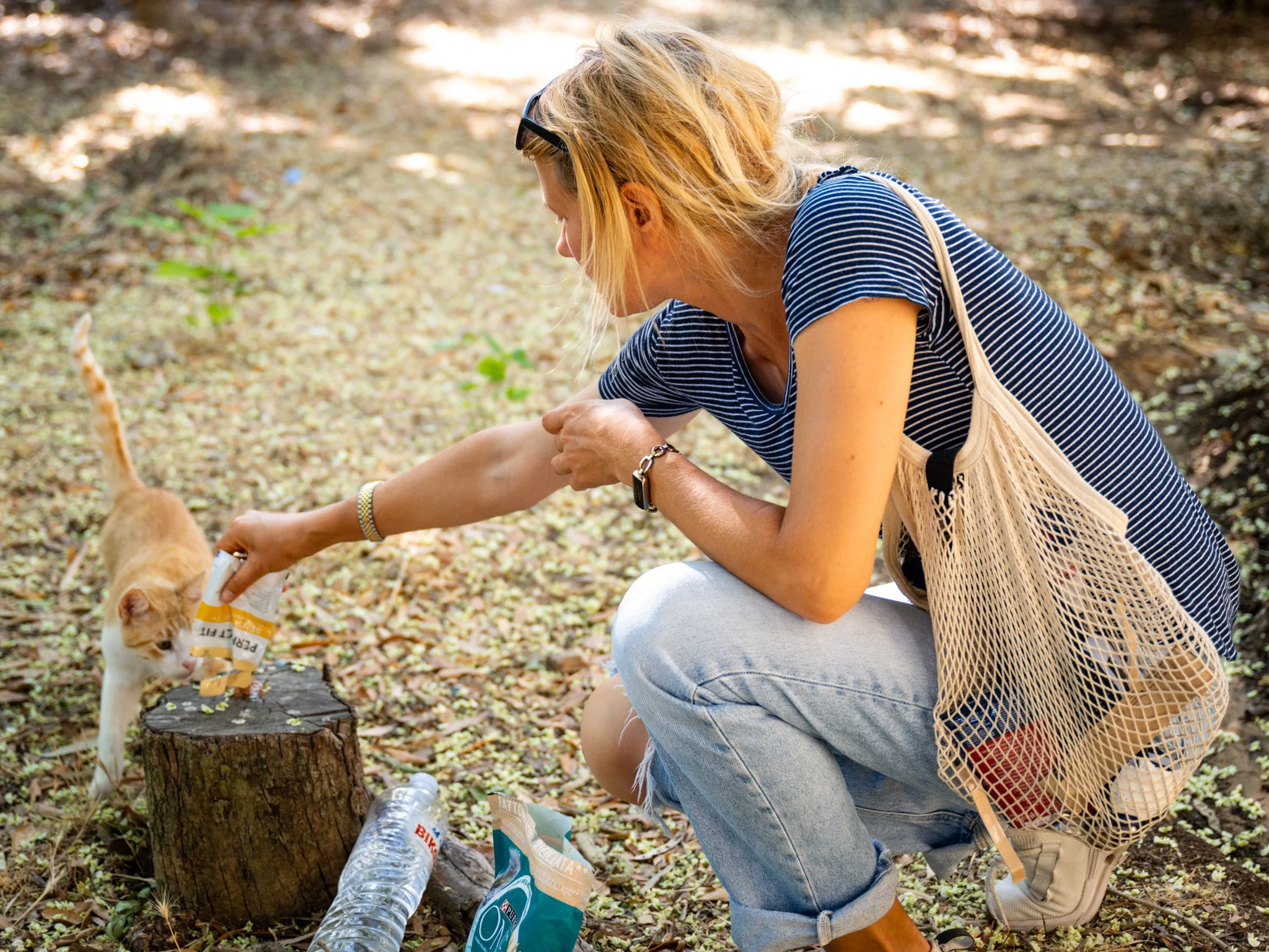
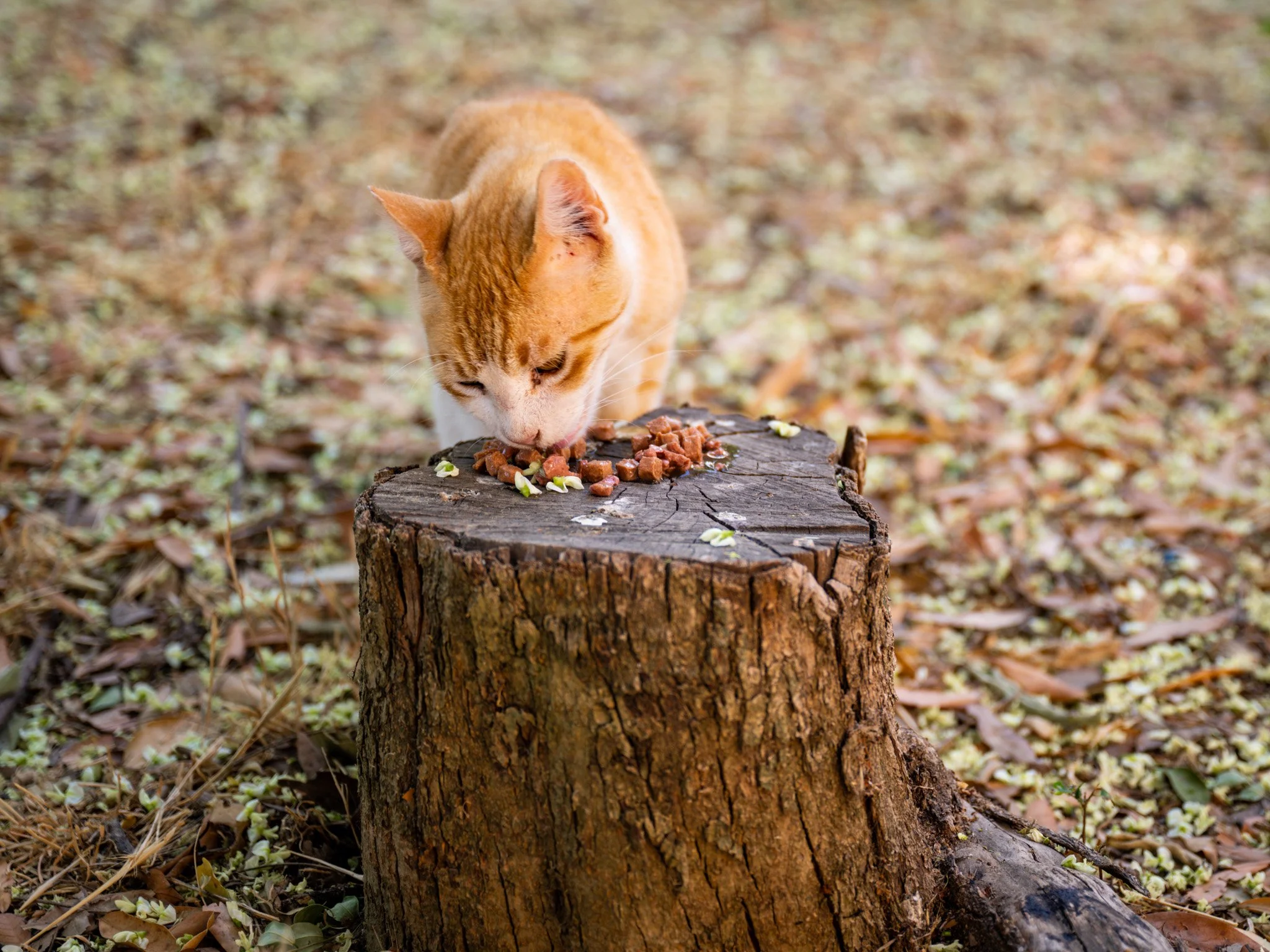
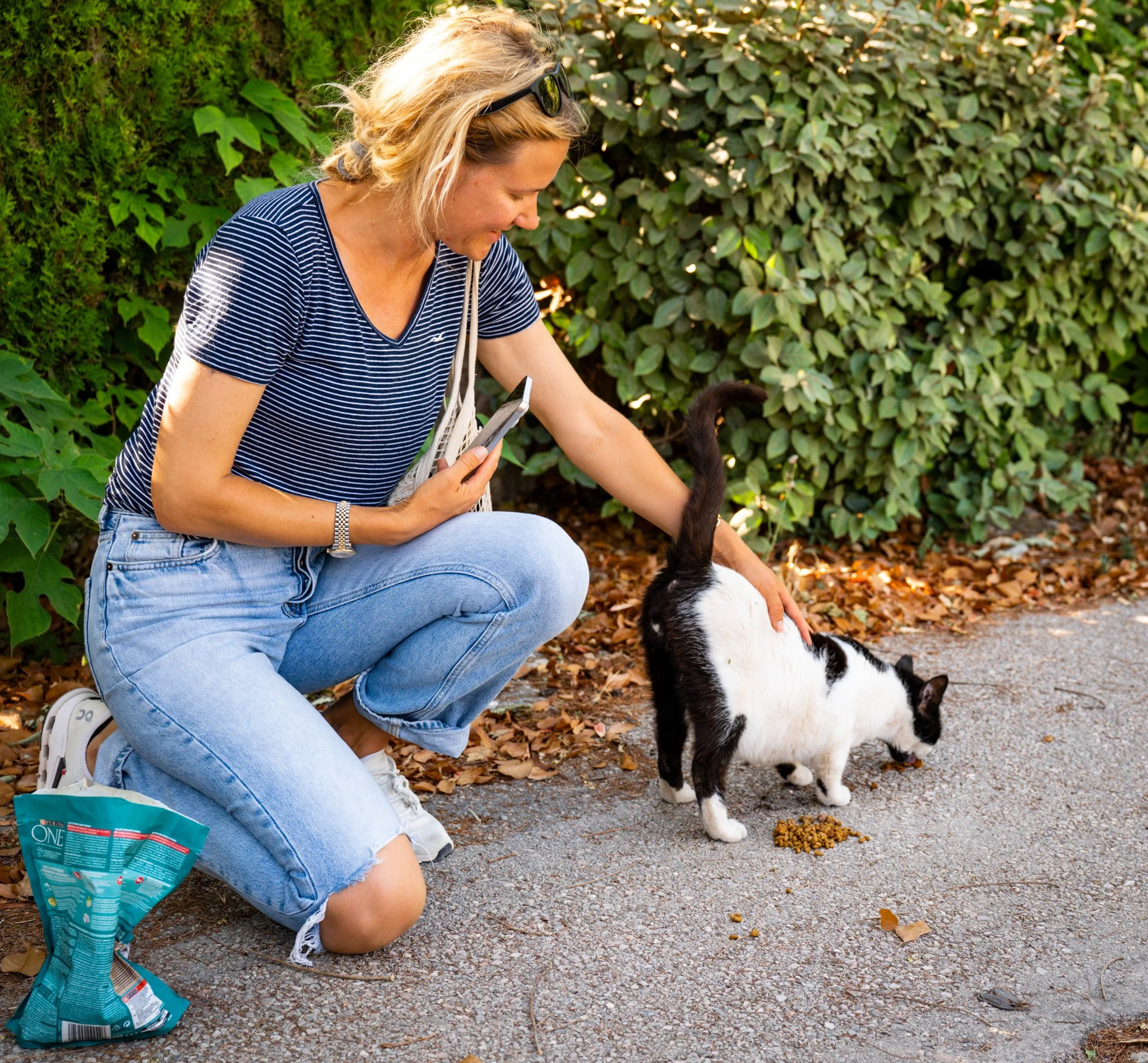
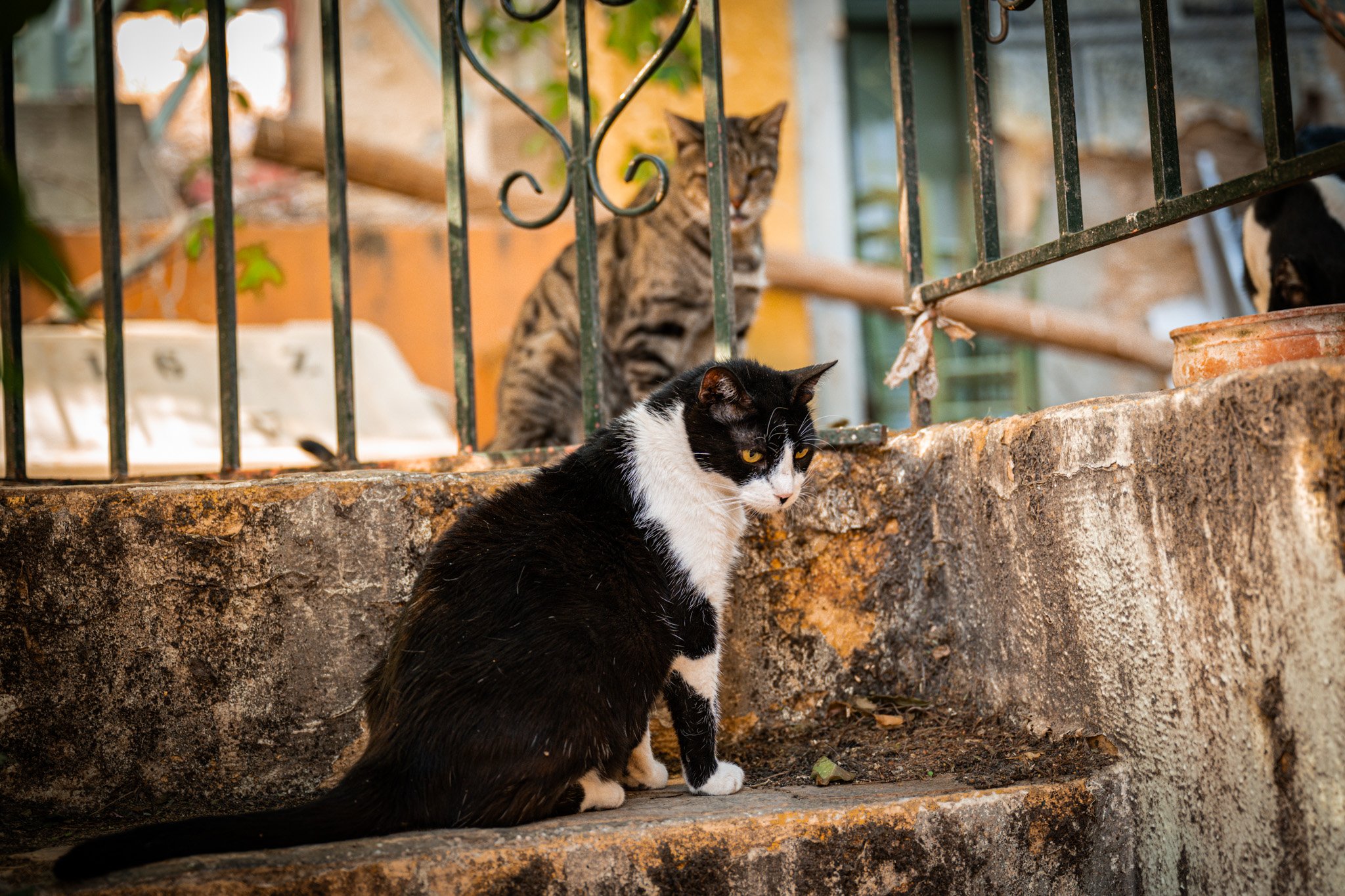
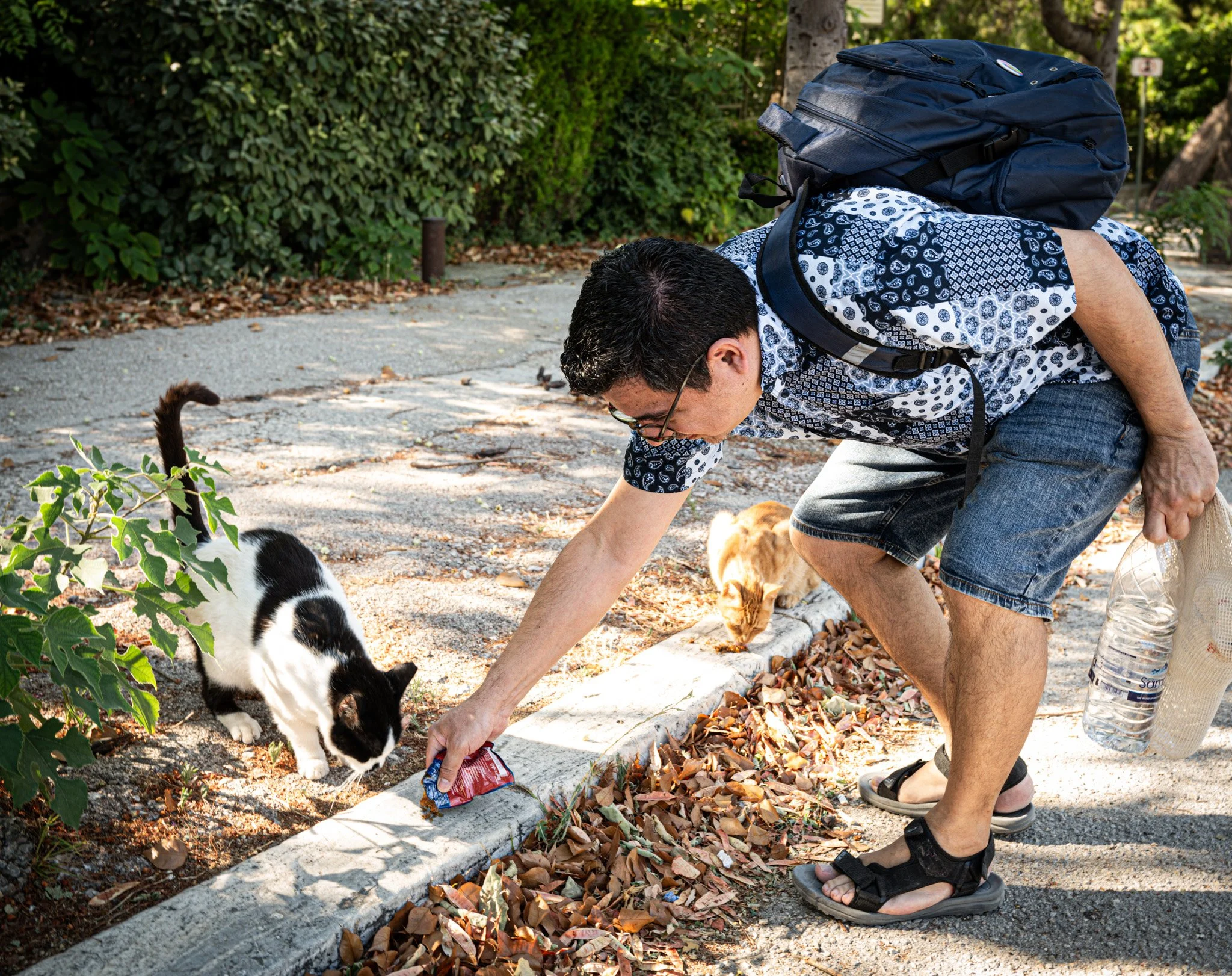
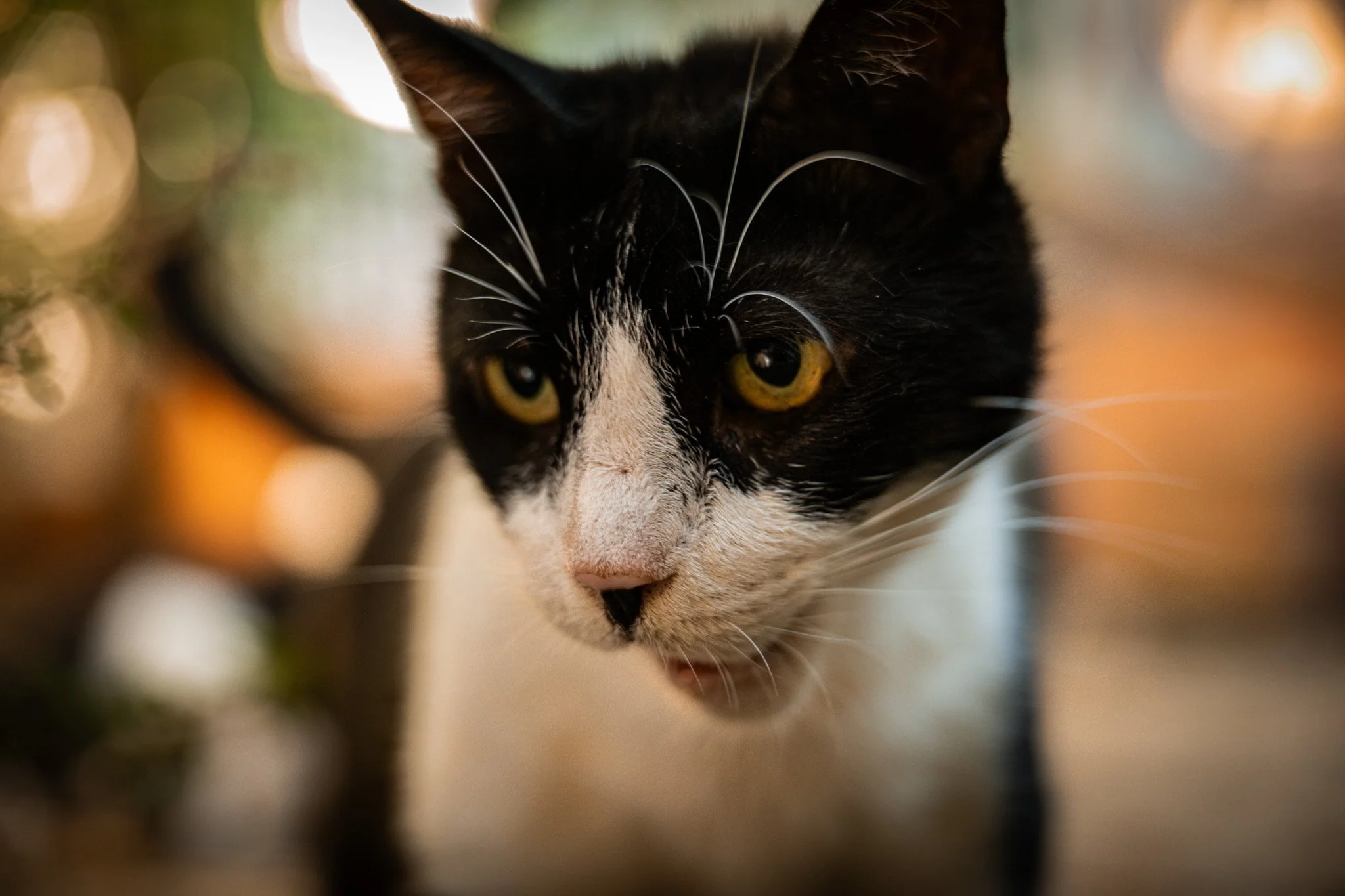
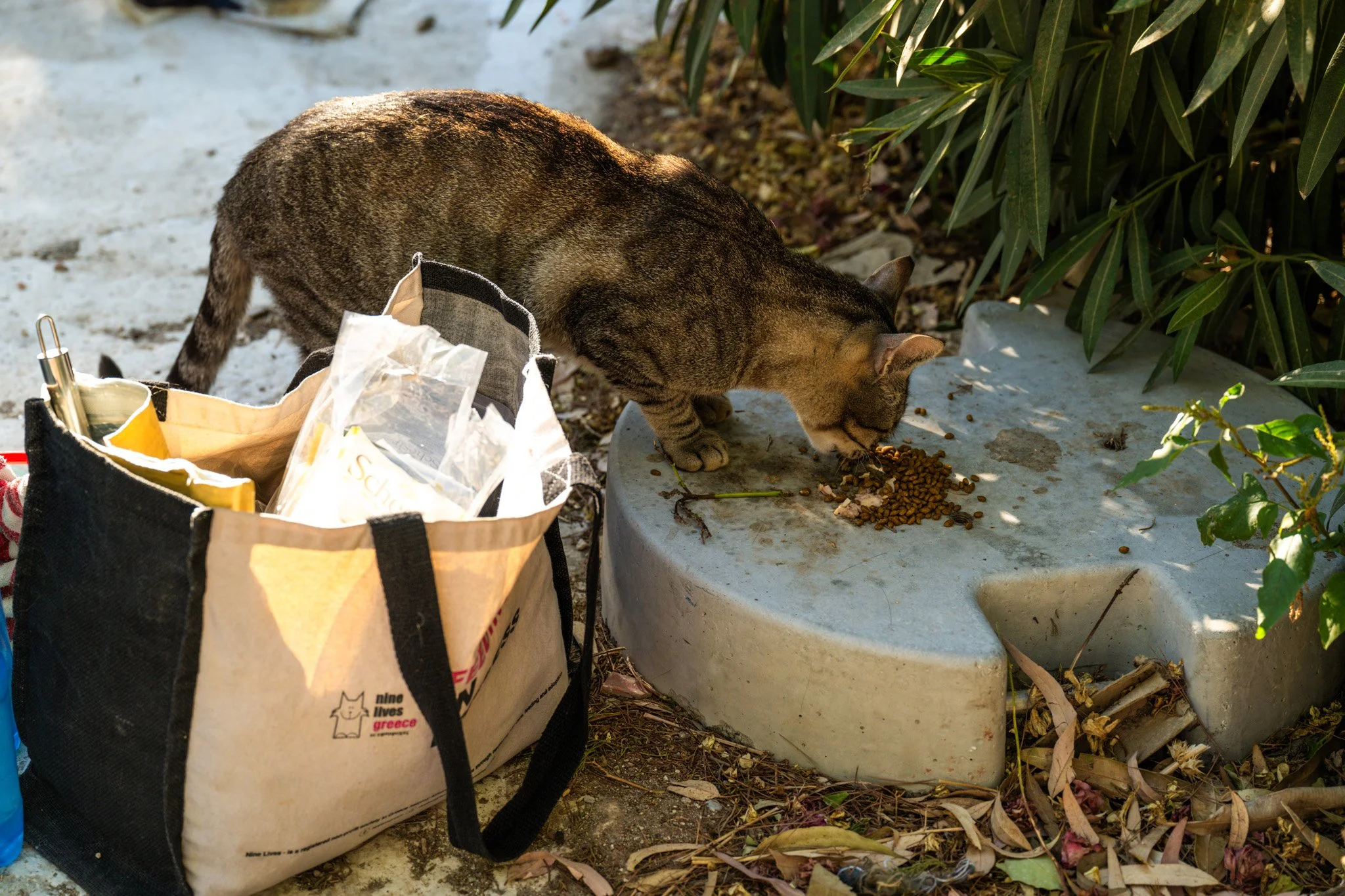
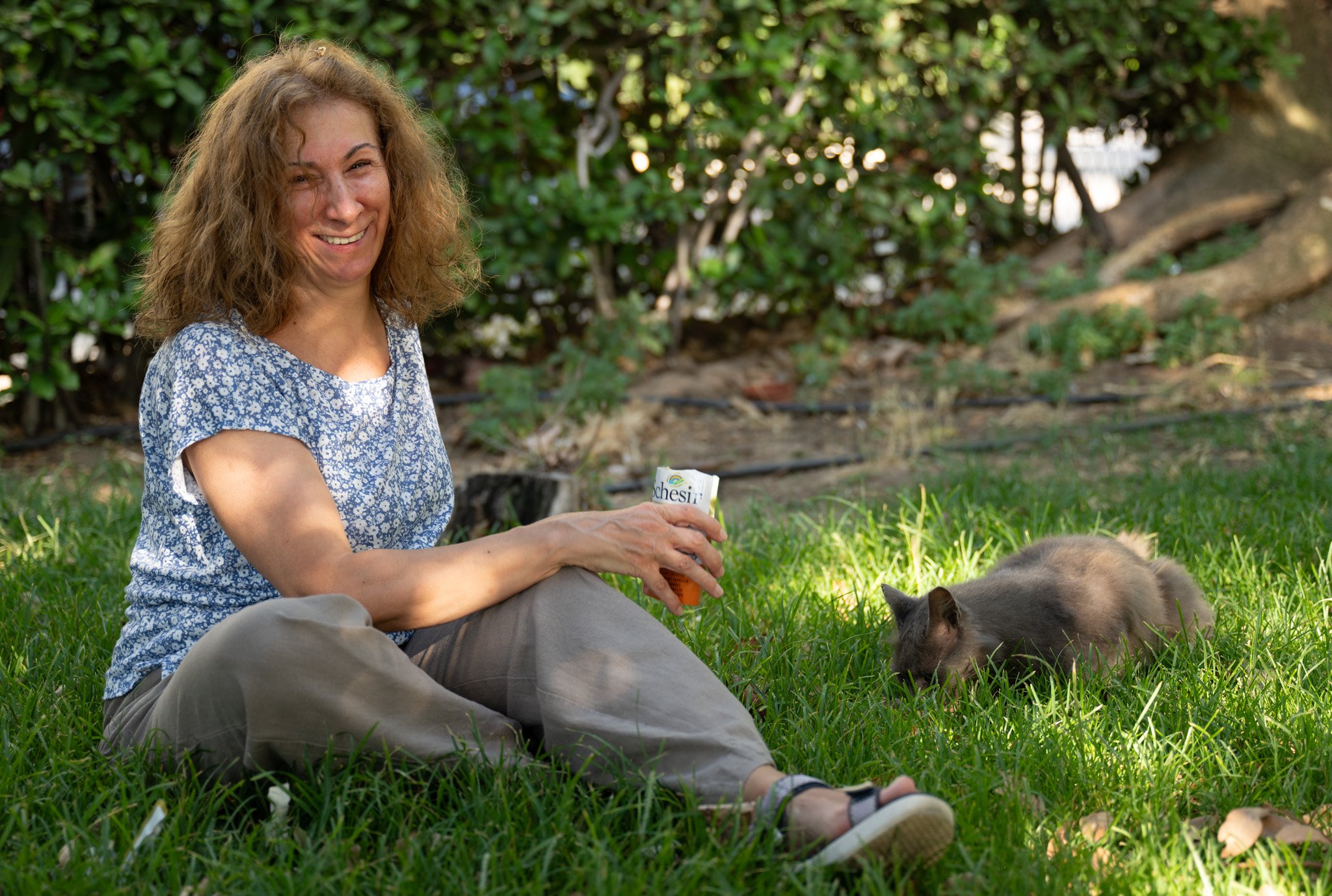
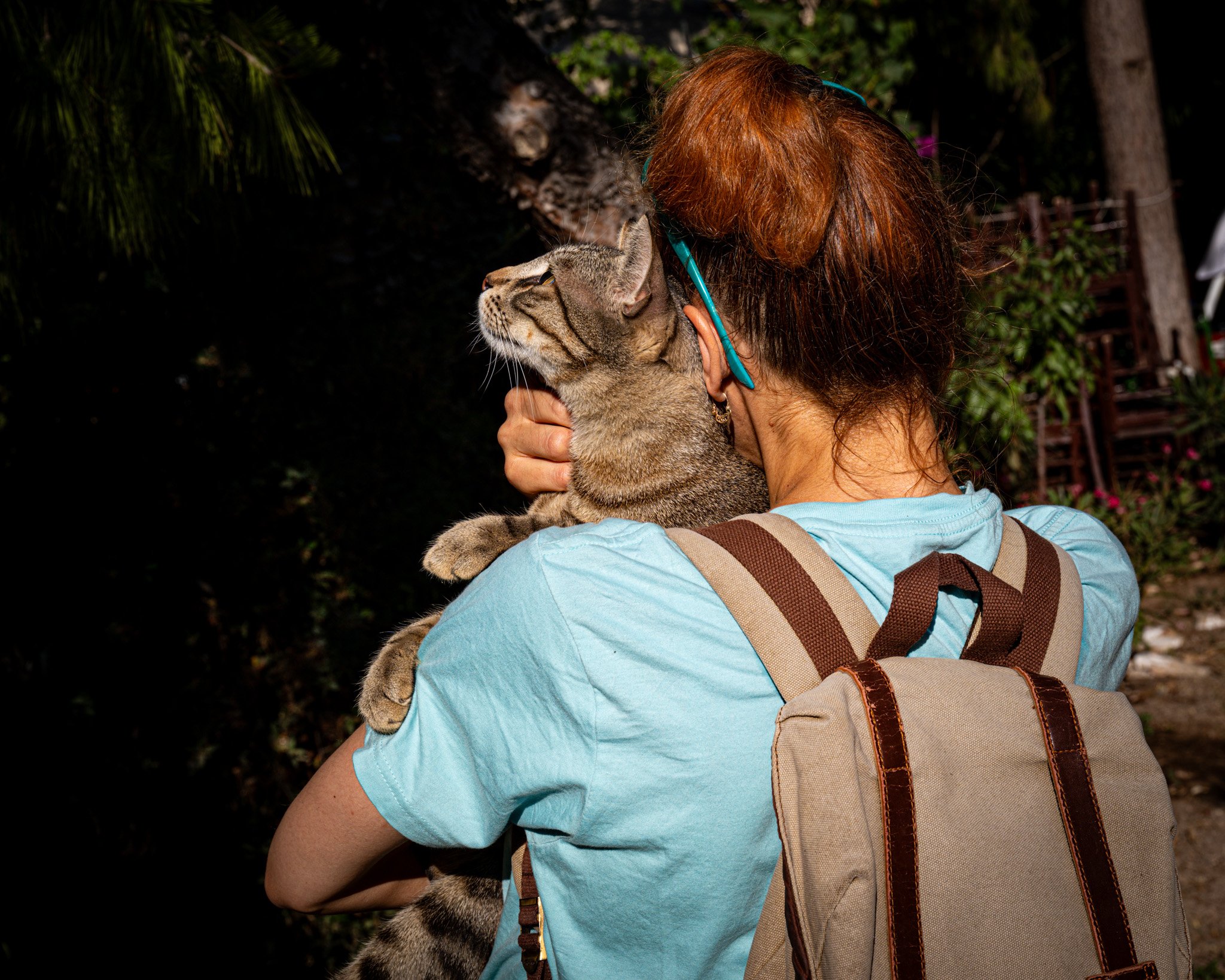
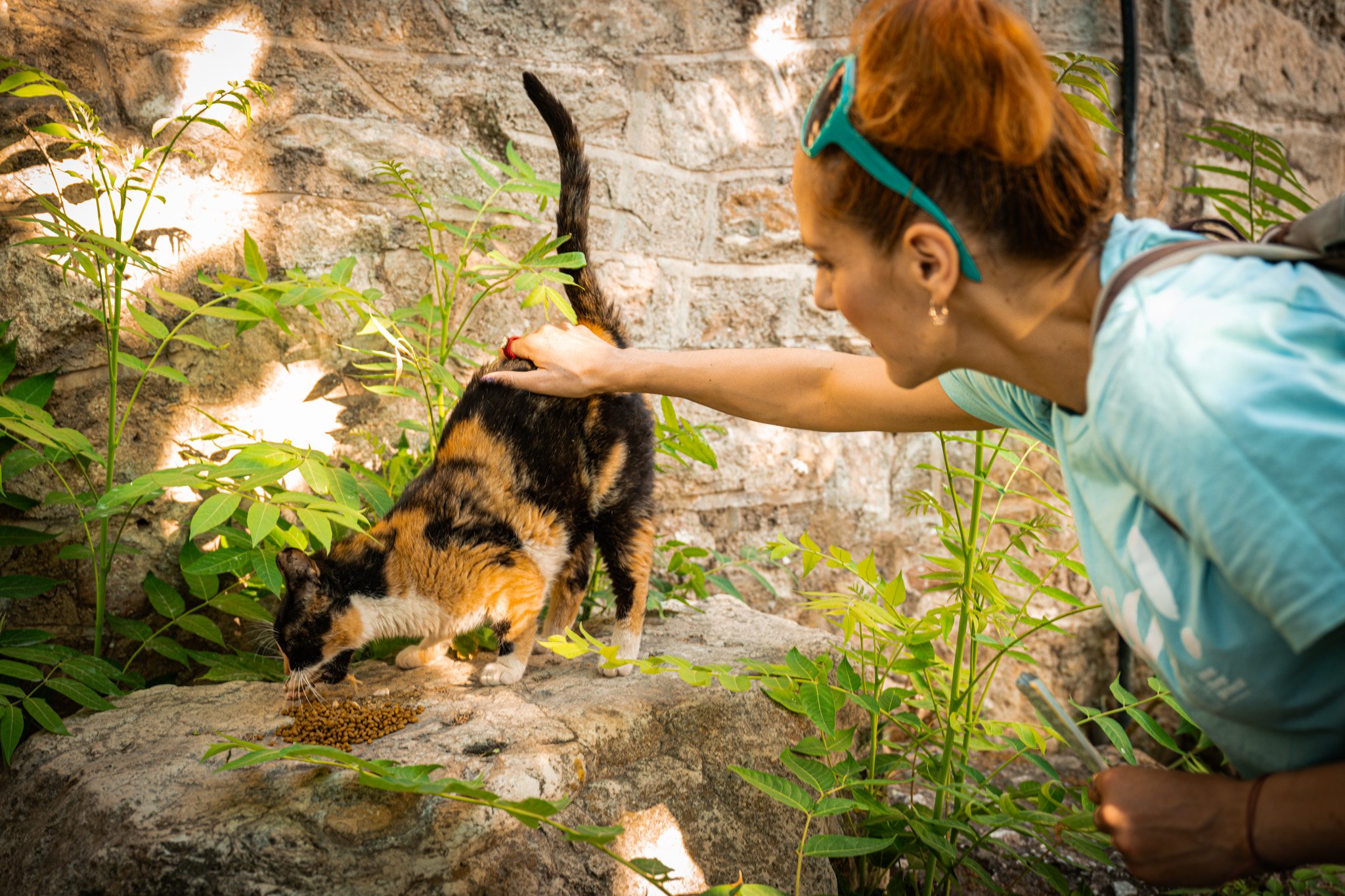
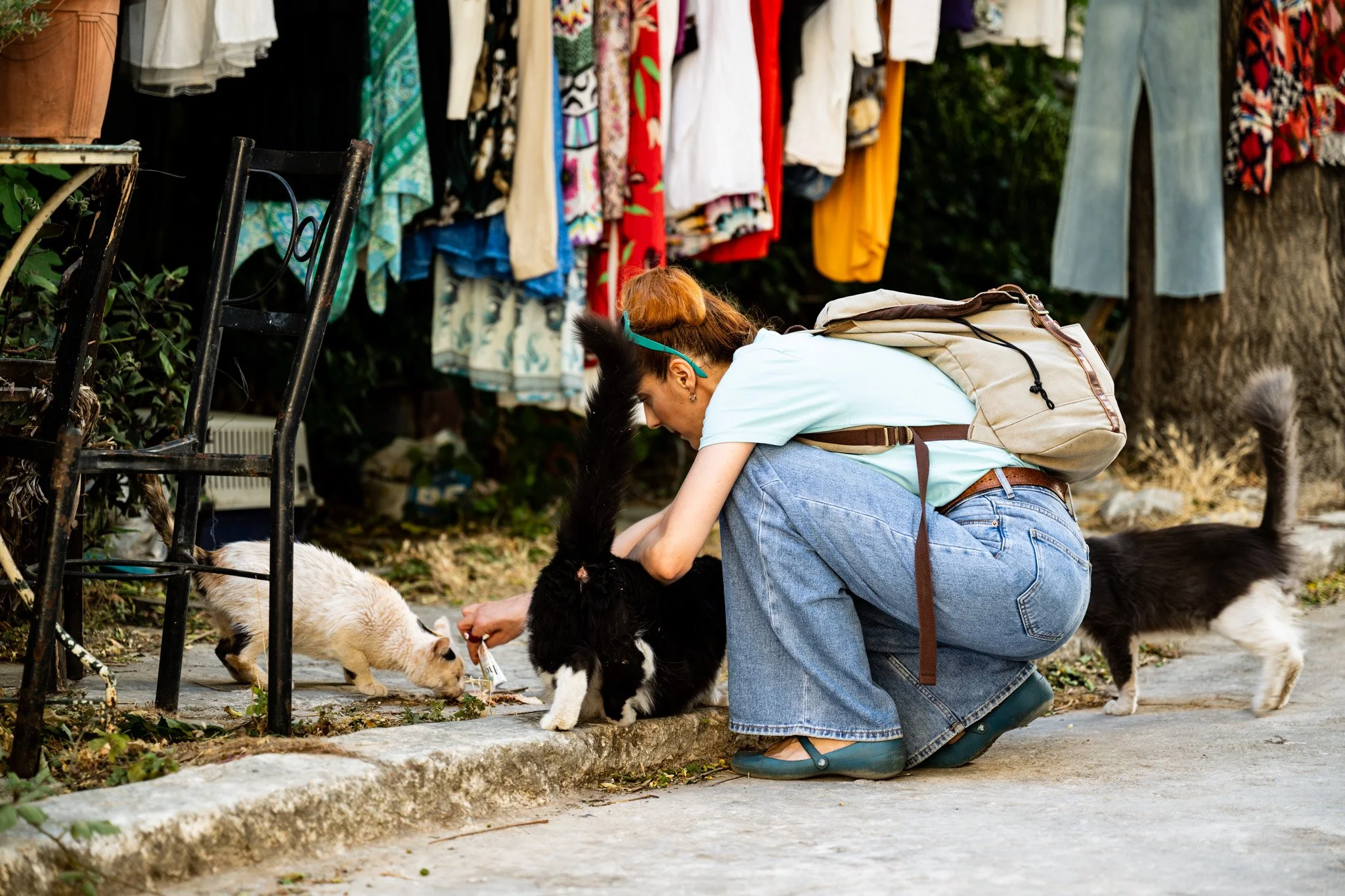
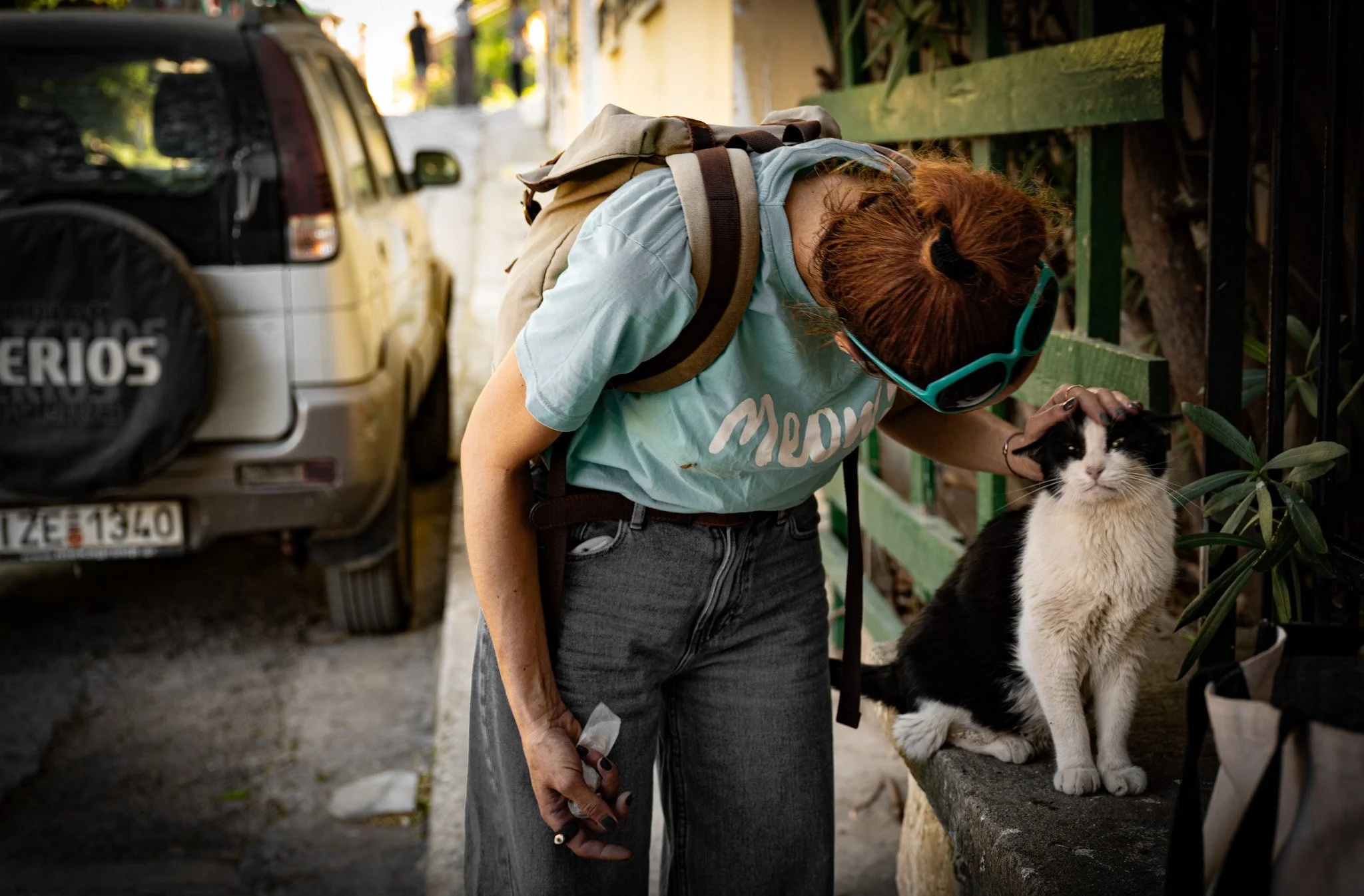
One by one, the cats appear in the daytime stillness of the gardens and hilly streets of Athens, where ancient ruins cast long shadows, and the wind slips through the branches with soft, steady breath. They emerge confidently dodging between marble steps and prickly shrubs onto sun-warmed stones. A chorus of meows rises around the volunteers of Nine Lives standing in their accustomed places and maintaining practiced calm. The feeders handle bowls and kibbles with such ease and routine that the presence of an outsider hardly registers. Indeed, their movements become almost a rhythm, as natural to this landscape as rustling leaves and distant hum of city traffic.
One of the volunteers, Tsampika Fesaki, has been here longer than most. She has seen generations of cats grow, disappear, reappear, and form complex, dynamic societies in hidden corners of Athens. “Well, here in this area,” she explains, gently setting a dish on the ground, “the cats are luckier from other cats in the areas around the center of Athens because it's a little bit protected area with not so many cars and people are more sensitive.” The cats half-circle the food around her with their patient familiarity, rubbing against tree trunks and leaping onto stone ledges.
Tsampika has also witnessed a recurring problem; she comes across more often than she might have ever imagined. “The good thing is that lately people are more sensitive and they care, they feed,” she says, watching a tabby nudge a skinnier calico aside, “but they are not so familiar with neutering. We have problems with people, they are against that, and they don't understand it's better for the animals and for the quality of the life of the animals.” Her relationship with the cats began back in 2009, more than a decade of early mornings, late evenings, and endless learning. “I started feeding the cats because a friend was also a volunteer, and he took me with him,” she recalls. That one invitation expanded into a commitment molded by habit, duty, and love.
With his bag slung over his shoulder and a swarm of cats practically at his heels, Luis Torres makes his way along Zappeion’s shaded paths, not far from his usual routine. His voice is warm, familiar, as if addressing neighbors he’s known for years. “It has been almost 6 years, since 2019,” he says when asked how long he’s been volunteering. “Before I moved to Athens, I followed Nine Lives on social media and asked if I could volunteer. When I arrived in Athens, I started my training and quickly started feeding. The reason I started was because I knew that in Athens there is a big population of stray cats and that the community takes care of them; I wanted to be apart and help with that.”
The cats here know him. Some sprint toward him with unrestrained enthusiasm; others approach more cautiously, peering from behind bushes as if to choose whether today is a day for bravery. Luis laughs as he calls them by name. It is here, in the open green of Zappeion, that his own story intertwines with theirs.
“That’s very interesting,” he says, “because I’m an immigrant in this country, and I always say that the cats in this part of Athens particularly are like some of my best friends. They are the Athenians I’ve known for the longest time.” He stops, recalling the bizarre silence of 2020, when everything vanished behind closed doors. “It was also during the pandemic that we had these special permits from the municipality to come out and feed the cats. They helped us to get through the pandemic, while everyone was isolated, we were coming out to see them and the park was empty. That time was so special and helped us build a better relationship with them.”
Luis's stories go beyond simple existence. They become tales of social structures: cautious friendships, surprising alliances, elderly kittens. It’s always a good story when you can finally help the cats by finding them a new home,” he says, “or how they develop relationships when a new kitten is left in the park; the senior cats will take care of them. It’s nice to see how they build their own relationships.”
Monty is one cat whose name instantly softens him. “We aren’t really meant to have favorites,” he admits, “but… I am very close to Monty. He is a survivor, sick for a long time. We didn’t think he would make it and would worry us when we would see him for weeks on end.”
Further up the ancient hillside, where the paths narrow and the houses of Anafiotika cling to the rock like whitewashed puzzle pieces, another cat has captured attention: Chevy. He is young and striking; his nature is unusually tender with volunteers. One description still lingers from a local feeder: “Yes, he's new to the area of Anafiotika… he’s young and beautiful, tender… makes me believe somebody may have abandon him.”
He winds his way up staircases and through stone alleys with the gentleness of one that was displaced not too long ago but is adapting fast. His presence is another thread in this ever-growing fabric of Athens' cat communities-each cat carrying with it its mystery, its history, its silent need.
Tia Na, another long-time volunteer, walks the same paths with practiced familiarity. “I am more than 10 years volunteer [sic],” she says, “but when I came to Greece, I saw all these cats and looked up on Google about these cats and found Nine Lives.” She observed their routines, relationships, and behaviors for a while before participating. “For one year straight, I just met so many cats, the cats knew each other, the cats did so much for me. I found blind cats, sick cats, injured cats, and wanted to provide more help so that’s when I discussed with Nine Lives about volunteering.”
When she considers the lessons she learned from work, her voice becomes softer. “It changed my perspective; I understood not just to ask for something but to give something. Until then I wasn’t helping rather just asking others to do something, but that taught me a big lesson.”
When stray cats appear on rooftops, under café tables, and next to archaeological stones, she gives advice to newcomers comparable to Luis and Tsampika. “I think it’s good to neuter and feed,” she says. “The feeding needs to be done in a cleanly matter… You must keep in mind that cats are a responsibility and that someone will always need to take care.”
Two cats changed her personally: Ben, who she was unable to part from as he grew older, and Cleopatra, whose extraordinary presence is still unforgettable. “She has these intense, beautiful eyes,” Tia says, smiling. “She’s a little bit wild but she still allows people to pet her.”
In the constant vibration of Athens, the ritual has not changed: feeders kneel, cats assemble, and in small, steady moments; trust is rebuilt. As the volunteers turn to head home, the cats remain interwoven into the fabric of this city, waiting for the next day, the next meal, the next voice-a quiet circle of care renewed each morning in soft Athenian light.